CONTESTING PARAMO: CRITICAL BIOGEOGRAPHY OF THE NORTHERN ANDEAN HIGHLANDS
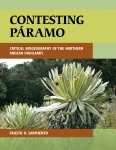
ISBN-13: 978-1-935987-31-4
# pages: 200
Copyright Year: 2012
Suggested Retail: $59.95
Description
In this eclectic presentation, Dr. Fausto Sarmiento has provided a humanized view of biogeography as it relates to the part of the tropical Andes known as the Páramo.
Informed by ecological theory and by the Humboldtian paradigm of mountain vegetation, the book bristles with tantalizing observations that evoke larger questions at the nature/culture interface.
Dr. Sarmiento's knowledge of and affinity for this compelling region of Highland South America have grown out of his early life experience in Ecuador and decades of research.The combination of biophysical focus, historical understanding, cultural sensitivity, conservation ethic, and the author's intellectual passion for these loftily heights makes this a geographical soliloquy on how biota is intimately connected to land and life.
Table of Contents
PREFACE-Kenneth Young
CHAPTER 1 INTRODUCTION
- Introducing the scientific problématique and theory setting
- Rationale of the Humboldtian paradigm for tropical mountains
- Andean Montology (re)visited in light of critical geographies
- Paradigmatic shift of culture/nature imaginaries
CHAPTER 2 ONOMASTICS AND DISTRIBUTION
- Páramo onomastics: a matter of definition of the study area
- The appellation of mountains and epistemological frames
- The meaning of Andes (re)constructed
- Politics of translation: Is Páramo an exegetic problématique?
- Language hegemony and politics of translation in naming
Páramo - The naming of geographical features in tropandean oropolitics
CHAPTER 3 BIOGEOGRAPHICAL TRUTHS
- Weather and climate patterns in tropical mountains
- Páramo as highland tundra on periglacial lands in the orobiome
- Disjunct distributions as reflection of biogeographical rules
- Island-like behavior of tropical montane biota
- Grappling with data on population dynamics
- Tropandean speciation and diversification episodes
- Centinelan extinction, transilience and the human driver of change
CHAPTER 4 BIOGEOGRAPHICAL MYTHS
- Páramo as natural ecosystem with rare and endemics
- Andean treeline dynamics in the anthrome
- Lost of roamers and gain of grazers as forest/grasslands debate
- Protection of environmental services and páramo isolation
- Solitude and marginalization a-la Rapoport rule
- Ethnoecological insight and traditional ecological knowledge
CHAPTER 5 CRITICAL BIOGEOGRAPHICAL PARADOXES
- Paleobiogeography of the Andes
- Fire as successional engine of maintenance and change
- Cultivation as a tool for appropriation of rurality
- Livestock rearing, feral selective mowing and (over)grazing
- Domesticates as integral of flora and fauna assemblages
- Political, religious and economic climates’ migrations
CHAPTER 6 FARMSCAPE TRANSFORMATION AND GLOBAL CHANGE
- Human-dominated landscapes, euhemerobiotic distributions
- Exhausted sources, defaunated sinks and highland invasions
- Conservation of (agro)biodiversity in Neotropical highlands
- Mountain responses to global environmental (in)justice
- Resilience, adaptation and mitigation of change
CHAPTER 7 POLITICAL ECOLOGY AS A MATTER FOR CONCLUSION
- Landscape archaeology and fossil mountain cityscapes
- Landscape ecology and associative mountain inscapes
- Landscape transformation and designed mountain farmscapes
CHAPTER 8 CODA
- So what: Critical montology needed for tropical mountain landscapes
- Then how: Climate mosaics and hybrid approaches to highland grasslands
- What next: Holistic classification versus positivistic grouping
EPILOGUE-Axel Borsdorf
LITERATURE CITED
GLOSSARY
INDEX
About the Author(s): Fausto O. Sarmiento
Dr. Sarmiento is a professor of Geography at the University of Georgia. He is a renown tropical mountain ecologist whose research has grounded Montology as the transdisciplinary science of mountain studies. He is in the board of international conservation organizations such as WCPA, IUCN and serves in professional geographical organizations such as the AAG and IGU.